
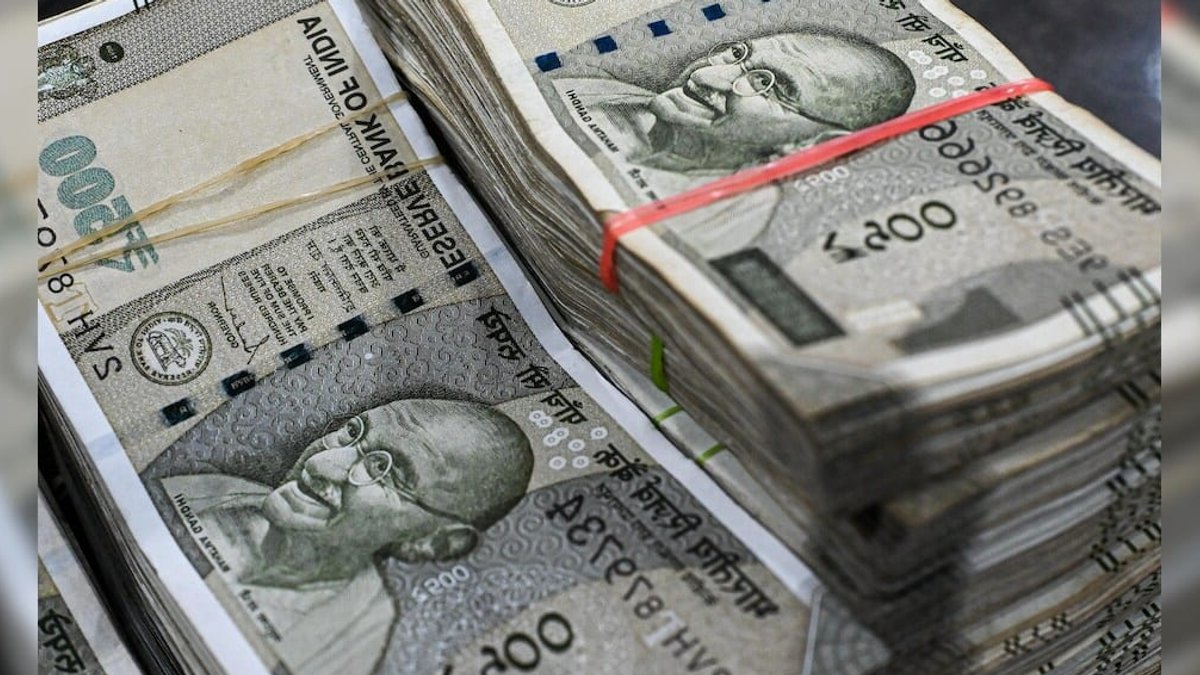
Domestic and international elements are weighing on India’s rupee. The unit failed to sustain its gains on Thursday, ending an eight-day winning run as rising crude costs amid West Asia tensions renewed selling interest.
Causes for the Slide
Pressure on the currency stems from more than just the West Asia conflict and higher oil. Rising global borrowing expenses, shifts in how importers and exporters hedge, and capital leaving the country are also stressing the domestic unit.
Although the rupee has appreciated 0.93 per cent in October so far, it has depreciated 0.14 per cent in the current financial year. The recent rebound was brief, as the currency dropped again on Friday to settle at 94.94 per dollar, compared with 94.83 the prior session.
The rupee climbed from 96.73 per dollar on October 9—near its all-time low of 96.96 reached in May—to an intraday peak of 94.33. This rise was supported by dollar inflows tied to the Jio Platforms initial public offering (IPO). Yet, these gains occurred while the Reserve Bank of India (RBI) actively intervened in the spot and non-deliverable forward markets.
Foreign exchange reserves dropped by $5.01 billion to $721.02 billion in the week ending October 16. Additionally, state-owned banks were purchasing dollars on behalf of oil firms for the central bank.
RBI Policies to Bolster the Unit
The RBI has introduced multiple steps to mitigate currency pressure. One such measure is a special dollar facility, which began on October 12. This allows Indian Oil Corporation, Bharat Petroleum Corporation, and Hindustan Petroleum Corporation to meet their daily dollar needs through designated banks.
The central bank has also tightened regulations for banks’ foreign exchange derivative positions. Furthermore, it established concessional swap windows for foreign currency non-resident (bank) deposits, overseas foreign currency borrowings, and external commercial borrowings. On October 7, the RBI also increased the repo rate by 25 basis points to 5.5 per cent.
Domestic forecasts of further rupee weakness have made importers want to lock in dollar payables, while exporters have delayed hedging their dollar receipts. This dynamic has boosted demand for dollars. The RBI’s foreign exchange risk reserve (FERR) framework aims to manage stress from such hedging activity.
Market Volatility and Dislocations
Distortions in the forward market have heightened volatility. Dollar flows related to the Jio Platforms IPO and associated funding swaps widened the gap between spot and forward exchange rates.
“Investors sell dollars in cash to subscribe to the IPO and book a forward to hedge currency risk,” said Abhishek Goenka, founder and chief executive officer of IFA Global. These trades, combined with RBI sell-buy swaps meant to soak up surplus rupee liquidity, widened the basis. The inability of exporters to cancel and rebook forward contracts worsened the dislocation.
While the basis eased on Thursday, with the spot rate moving up and forwards correcting, the market remains off-kilter, Goenka noted. He stated there is still room for correction, and the 94.20-94.40 per dollar zone represents a technically strong support area. This area could trigger spot buying, especially given that Brent crude is trading above $110 per barrel.
Expansionary fiscal policies and an artificial intelligence (AI)-led investment boom in the US have increased competition for capital, pushing up global borrowing costs. This pressure is not isolated to India, as the higher cost of capital is impacting emerging markets generally, she added.
Issues with the External Account
The rupee is also contending with external account imbalances. According to an Axis Bank report, the current account deficit (CAD) is above levels that can be comfortably funded. This is because higher global interest rates have limited the amount of the deficit that capital flows can cover.
“Even with new measures, CAD is well above now financeable levels,” the report stated. This has kept India’s basic balance of payments in deficit for several quarters. Raised forward premiums also point to a reversal of the covered interest parity relationship, reflecting expectations of rupee depreciation and, to some extent, pushing domestic interest rates higher, the report said.
Axis Bank suggested that measures may need to extend beyond the current account to tackle capital outflows. The bank also observed that defending the currency using higher interest rates has not been effective in past episodes.


