
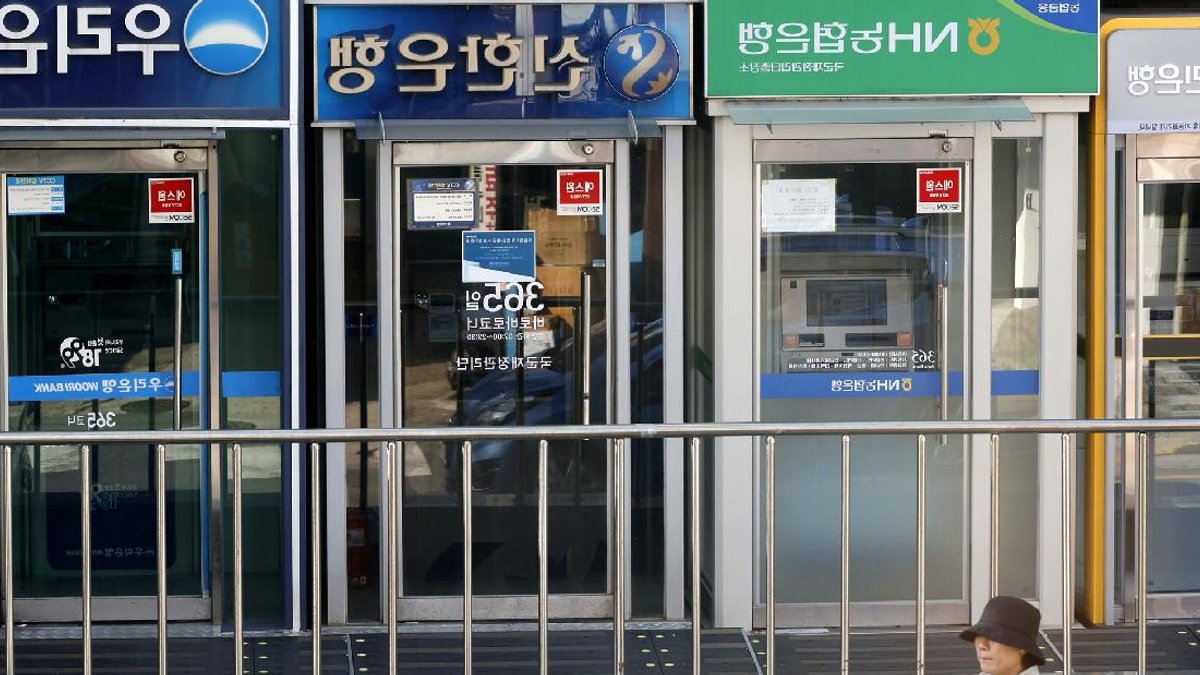
Foreign nationals now hold more than 25 trillion won ($17.6 billion) in deposits at South Korea’s five largest commercial banks, marking a sharp rise in their role as a key customer segment.
According to data submitted by the Financial Supervisory Service to Democratic Party lawmaker Min Byung-duk, deposits from foreign customers at KB Kookmin, Shinhan, Hana, Woori, and NH NongHyup banks totaled 25.27 trillion won as of June. That’s a 52.9% jump from 16.53 trillion won at the end of 2021.
Deposits grow faster than customer base
The number of foreign customers increased by 22.1% over the same period, reaching 6.88 million. But deposit growth outpaced customer growth, pushing the average balance per account to 3.67 million won—up from 2.93 million won in 2021.
Foreigners are also using more financial services beyond basic payroll accounts and remittances. Demand now includes savings products, payment cards, and loans. Outstanding loans to foreign customers at the five banks rose 14.2% to 5.29 trillion won by the end of June.
Hana Bank leads the market, serving 2.57 million foreign customers—37.4% of the total. Woori Bank follows with 1.50 million, while KB Kookmin, Shinhan, and NH NongHyup hold 1.10 million, 973,141, and 731,654 customers, respectively. Hana also holds the largest share of foreign deposits, with 8.34 trillion won, about a third of the total.
Related: Kospi seen falling short of record high in 2024
The bank has expanded its foreign customer base since launching its multilingual mobile app, Hana EZ, in 2019. The app supports multiple languages, making banking more accessible to non-Korean speakers.
Limited products for a growing market
Despite rapid growth, financial products tailored to foreign customers remain scarce. The five major banks offer just 20 specialized products—an average of four per bank. Most are basic services like checking accounts and savings products.
Industry officials say long-term residents, including those seeking housing finance, investment, or wealth management, have few options. As average deposits per foreign customer rise, demand is expected to shift toward investment products, retirement planning, and mortgage financing.
This gap presents an opportunity, but banks have been slow to adapt. The current offerings don’t reflect the financial sophistication of a customer base that now holds billions in deposits and loans.
Regional banks enter the competition
Regional financial groups are also targeting foreign customers, with JB Financial Group leading the push. Jeonbuk Bank nearly tripled its foreign customer base from 66,000 in 2022 to 180,000 as of March this year. Its loans to foreign customers jumped 90% to 664.8 billion won by June.
Related: Naver Operating Profit Falls Slightly
Gwangju Bank’s foreign loan balance grew to 70.6 billion won from 50.7 billion won, while JB Woori Capital expanded its foreign lending portfolio more than fivefold to 349.2 billion won from 63.7 billion won in 2023.
JB Financial has expanded services through specialized branches. Jeonbuk Bank operates five foreign financial centers in Suwon, Dongdaemun, Jeonju, Busan, and Ansan. Gwangju Bank has two branches in Gwangju and Samho focused on foreign residents.
Min Byung-duk, the lawmaker who requested the data, said foreign residents accumulating assets in South Korea need broader access to investment products like mutual funds and exchange-traded funds. He also called for stronger investor protection, financial education, and multilingual support to help them handle the market.
The trend shows no signs of slowing. As more foreigners settle in South Korea for work, study, or marriage, their financial footprint will only grow—and banks will have to decide whether to meet that demand or risk losing a valuable customer base.


