
ASEAN’s economy is approaching US$4 trillion and the bloc remains a competitive manufacturing destination. As the world moves toward net zero, the carbon intensity of power is becoming a major business factor. Companies face pressure to reduce electricity-related emissions and show credible transition plans. For power-intensive sectors, electricity procurement is now a strategic driver of competitiveness.
Policy ambition is gathering pace: eight ASEAN member states have committed to net zero or carbon neutrality. The region must meet this ambition while accommodating a power system that has grown ninefold since 1990 and is projected to expand by 3–4% annually through 2040. ASEAN countries are investing significantly in generation. Solar PV and wind installed capacity exceeded 45 GW in 2024, up from 4 GW in 2015.
Grid Readiness Must Scale with Renewable Momentum
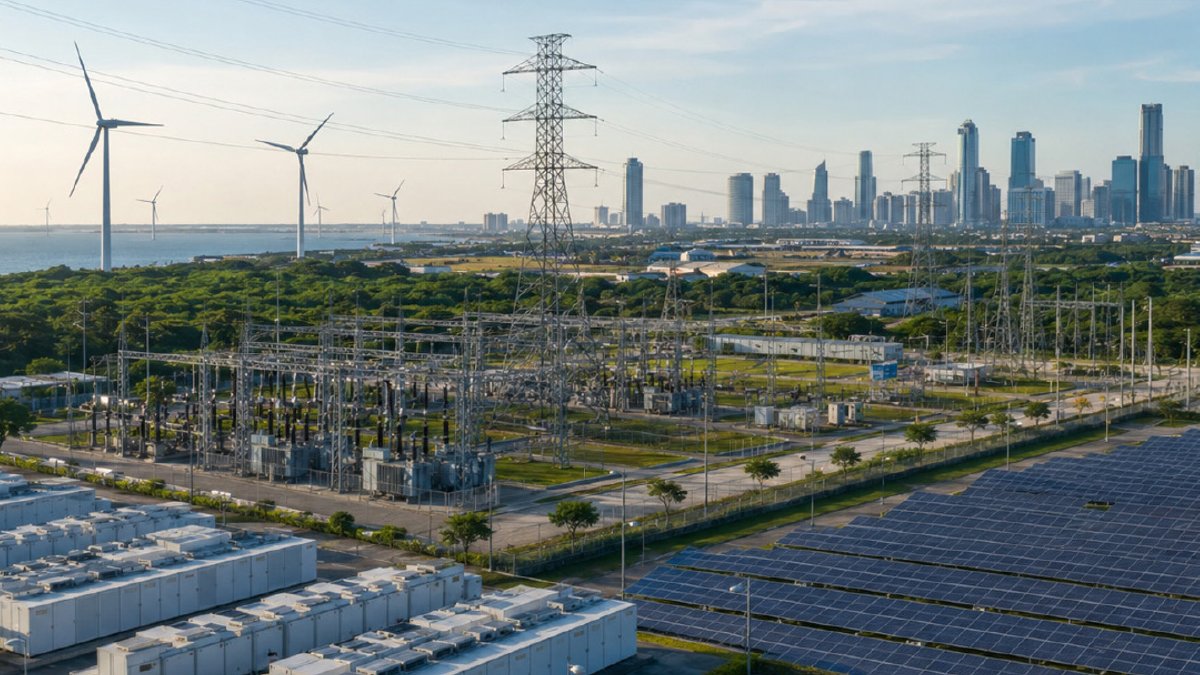
Expanding generation is only part of the solution. Renewable resources are often located where demand is not, and clean power must move through networks capable of absorbing it reliably. In Malaysia, the National Energy Transition Roadmap (NETR) identifies transmission, distribution, storage and policy reforms as critical enablers to overcome grid limitations.
Related: Over 20 Tonnes of Subsidised Cooking Oil Seized in Kelantan
Stronger networks, storage, demand response and system flexibility reduce the amount of renewable energy that goes unused because the grid cannot deliver it. They also improve resilience and lower costs. The ASEAN Power Grid initiative aims to connect national systems for cross-border trade. The International Energy Agency (IEA) estimates that ASEAN will need more than US$300 billion to expand and modernise electricity grids between 2025 and 2040, including about US$27 billion for cross-border interconnectors.
Building the physical infrastructure is expensive, but the region also faces a less visible challenge. The International Energy Agency notes that aligning with announced climate pledges would require clean energy investment in Southeast Asia to rise to over US$190 billion by 2035 — around five times today’s level. The scale of this financing gap positions banks as key partners in supporting industries through the transition. Yet capital does not automatically flow to projects; it flows to projects that are bankable and supported by clear plans. Higher financing costs, perceived project risks and regulatory uncertainty can make it difficult for projects to attract investment, even where the long-term need is clear.
Blended finance can help bridge the gap by combining concessional capital from governments, development finance institutions and climate funds with commercial financing. This improves project viability and helps crowd in private capital. Clear risk allocation, transparent contractual frameworks and credible long-term revenue models remain essential for complex transition projects like green hydrogen, geothermal development and regional interconnection.
Related: Workflow Solutions Powered by AI-Driven Workflow Automation for SME
The energy transition requires action across the entire ecosystem. For power-sector players, the priority is execution discipline: building stronger pipelines, improving preparation and clarifying revenue models. Banks and financial institutions have an important role beyond financing. They can provide transition advisory and help clients structure financing around measurable outcomes. CIMB’s GreenBizReady™ program is one example of how capability-building can help SMEs and MSMEs take practical transition actions, including emissions measurement, energy efficiency improvements and renewable energy adoption.
Ultimately, energy transition readiness is not only an issue for the energy sector. For the wider economy, the task is to treat energy transition readiness as a strategic issue. This means understanding future electricity needs and energy costs, assessing power reliability and improving energy efficiency. Businesses that prepare early will be better positioned to manage risk as the region’s energy system evolves. The transition is no longer simply an environmental consideration; it is becoming part of business competitiveness. Those that understand their energy exposure and signal demand for lower-carbon power will be better positioned to capture opportunities as ASEAN’s power system evolves.


