
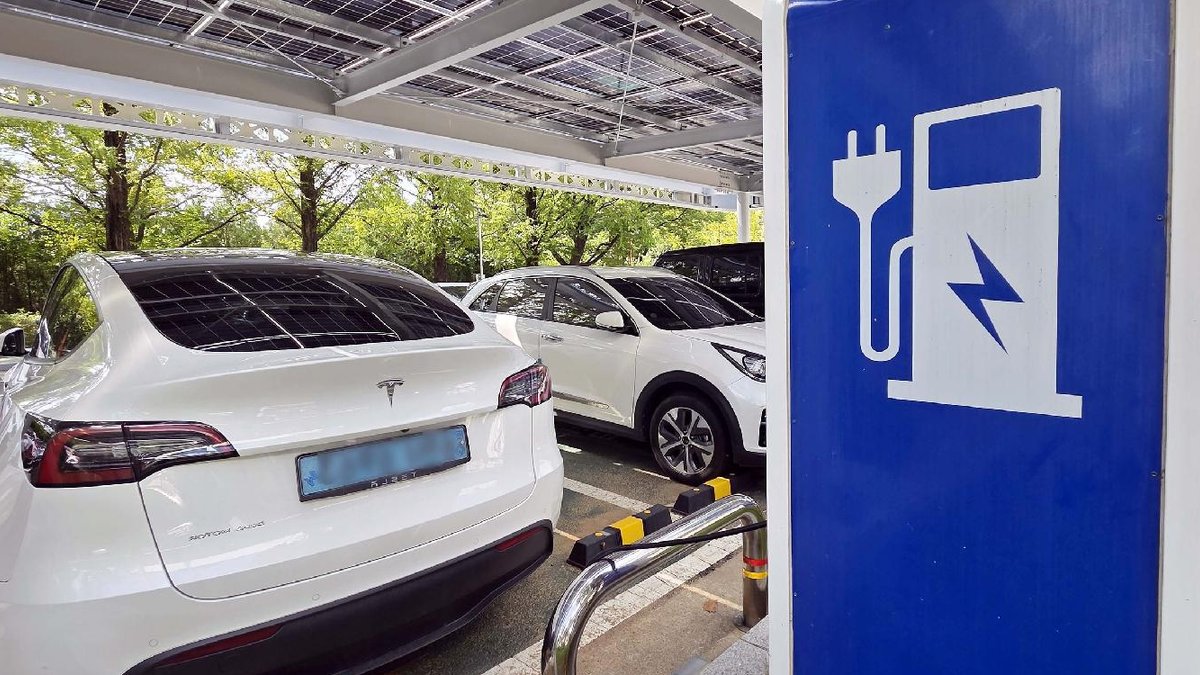
South Korea’s electric‑vehicle fleet crossed the one‑million mark in the first half of 2024, a milestone that indicates a rapid shift toward greener transportation.
EV registrations surge as overall vehicle count steadies
The Ministry of Land, Infrastructure and Transport reported that the total number of registered vehicles reached 26.68 million by the end of June, an increase of 161,000 from the previous year.
This increase equates to roughly one vehicle for every 1.92 people.
Within that total, cumulative registrations of eco‑friendly vehicles climbed to 3.95 million, up by 459,000 units year‑over‑year.
Consequently, the share of such vehicles rose to 14.8 percent from 13.2 percent at the end of 2023.
EVs alone grew 21.8 percent, reaching 1.01 million registrations, surpassing the million‑vehicle threshold for the first time.
They now represent 4.1 percent of all registered cars.
Domestic versus imported electric models
Domestic EVs accounted for 718,183 units, or 65.6 percent of the total EV stock, while imported models added 377,035 units, representing 34.4 percent.
Related: LG posts record Q2 results on strong appliance sales
Registrations of home‑grown EVs rose by 112,009 vehicles, compared with an 84,108‑vehicle increase for imports.
The Ministry of Land, Infrastructure and Transport noted that the growth rate for imported EVs outpaced domestic models by 10.2 percentage points.
By vehicle type, electric passenger cars dominate the market with 884,413 units.
They make up 80.8 percent of all EVs.
Electric trucks number 193,689, electric buses 15,909, and electric special‑purpose vehicles 1,207.
Hybrid vehicles also saw a notable rise, adding 260,000 units to reach 2.81 million registrations.
Hydrogen fuel‑cell cars increased modestly by 3,000 units, bringing the total to 48,000.
In contrast, internal‑combustion engine vehicles fell by 297,000 units, leaving 22.54 million on the road.
Related: Korean battery makers lose ground to Chinese rivals
Diesel models suffered the steepest decline, dropping 246,000 units.
Gasoline cars followed with a 42,000‑unit reduction and LPG vehicles down 9,000.
New‑car market reflects growing eco‑friendly demand
During the first half of the year, 857,000 new vehicles were registered.
They included 199,000 EVs, representing 23 percent of all new registrations.
Among the newly registered EVs, domestically produced models contributed 57.3 percent, while imported versions made up 42.7 percent.
Overall, eco‑friendly vehicles—including hybrids and hydrogen fuel‑cell cars—totaled 494,000 new registrations.
This represents 57.6 percent of the half‑year’s market.
“While the total number of registered vehicles increased only modestly, eco‑friendly vehicles posted rapid growth, driving changes in the market,” said the head of the Motor Vehicles Management and Insurance Division at the land ministry.


