
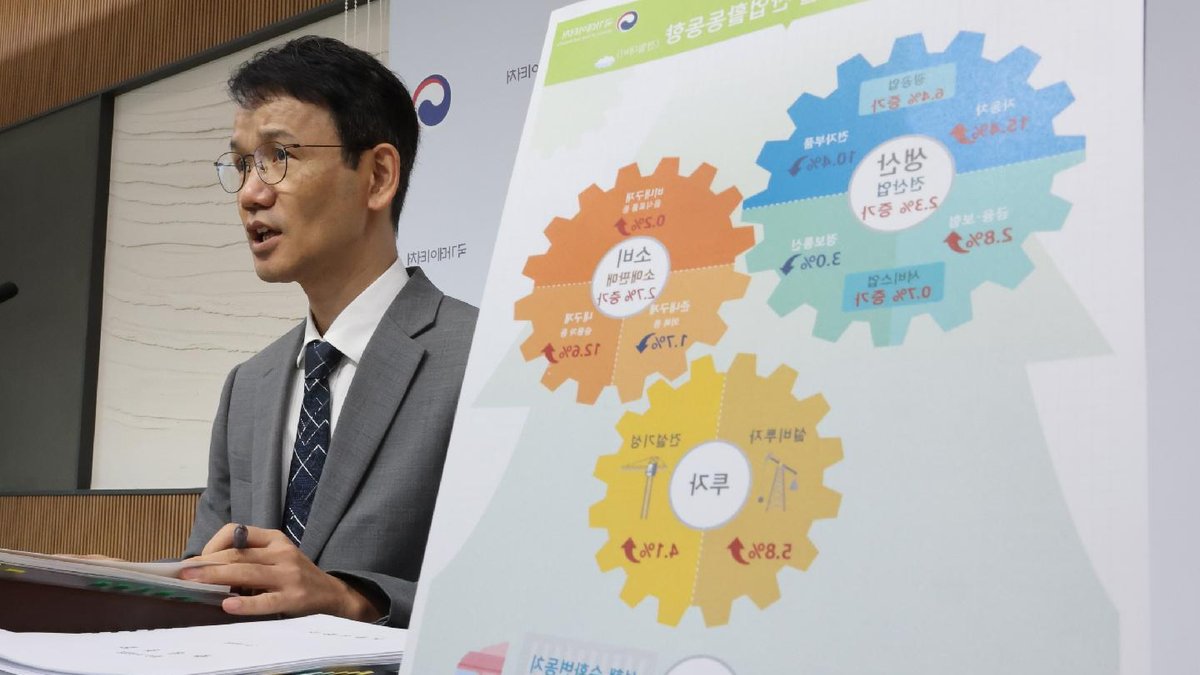
South Korea’s industrial output, consumer spending, and business investment all posted gains in June for the first time in three months. The ministry reported that overall production climbed 2.3 percent month-on-month. This recovery ended a two-month decline where output had fallen in April and May. The increase marked the largest monthly gain since June 2020.
Manufacturing and Autos Lead the Rebound
The mining and manufacturing sector drove the bulk of this growth, climbing 6.4 percent from the previous month. This pace represents the strongest expansion in six years. Automobile production surged 15.4 percent as parts supply chains normalized following a fire at a supplier earlier in the year. Stronger demand from both domestic and overseas buyers contributed to the surge.
Semiconductors also bounced back, with production rising 4.5 percent. This reversal followed a 10 percent drop in May. The recovery was supported by higher demand for memory chips and non-memory chips. The sector was the bright spot in an otherwise mixed picture. Output for electronic components, telecommunications equipment, and computers actually declined during the month.
Related: Korea hits 1 million electric vehicles
Spending Picks Up as Tax Incentives Fade
Consumer activity strengthened alongside industrial production. The retail sales index increased 2.7 percent from May. A sharp jump in durable goods sales, up 12.6 percent, pushed the figure higher. This was the fastest pace of growth recorded since September 2009. Passenger vehicle sales soared 21.8 percent, the largest increase in more than six years.
Buyers rushed to purchase vehicles before a temporary individual consumption tax cut expired at the end of June. Promotional campaigns by major electronics companies also likely boosted sales of appliances and mobile devices. Service-sector output, which reflects consumption of services, increased 0.7 percent from the previous month.
Investment Grows and Indices Rise
Business investment continued to climb, with capital expenditure jumping 5.8 percent. Gains were recorded in machinery, including precision equipment, and transportation equipment. Construction output also rebounded, rising 4.1 percent. Stronger building construction activity offset weaker civil engineering work.
Economic indicators painted a mixed but generally improving picture. The coincident composite index, which measures current conditions, rose by 0.5 points. The leading composite index, a gauge of future activity, increased by 0.9 points. The data points to a recovery in key areas of the economy, though the strength varies by sector.
Related: Johor polls Mohamad Sabu urges manifesto implementation for change
This divergence highlights a fragile recovery path for the nation. While the export-heavy manufacturing base is recovering from supply chain disruptions, the domestic construction sector remains a drag on overall growth. The reliance on global demand for autos and chips to drive the numbers suggests that without a simultaneous pickup in domestic infrastructure spending, the economic rebound may not be sustainable long-term.
For the full year to date, the picture remains mixed. The first half of the year saw industrial production and retail sales each increase 2.8 percent. Capital investment surged 11.4 percent during this period. However, the construction sector remains the weakest component of the economy, falling 5.3 percent.
“Production, consumption and capital investment are showing an improving trend, but the construction sector remains sluggish,” said Lee Doo-won, a senior statistics official.


