
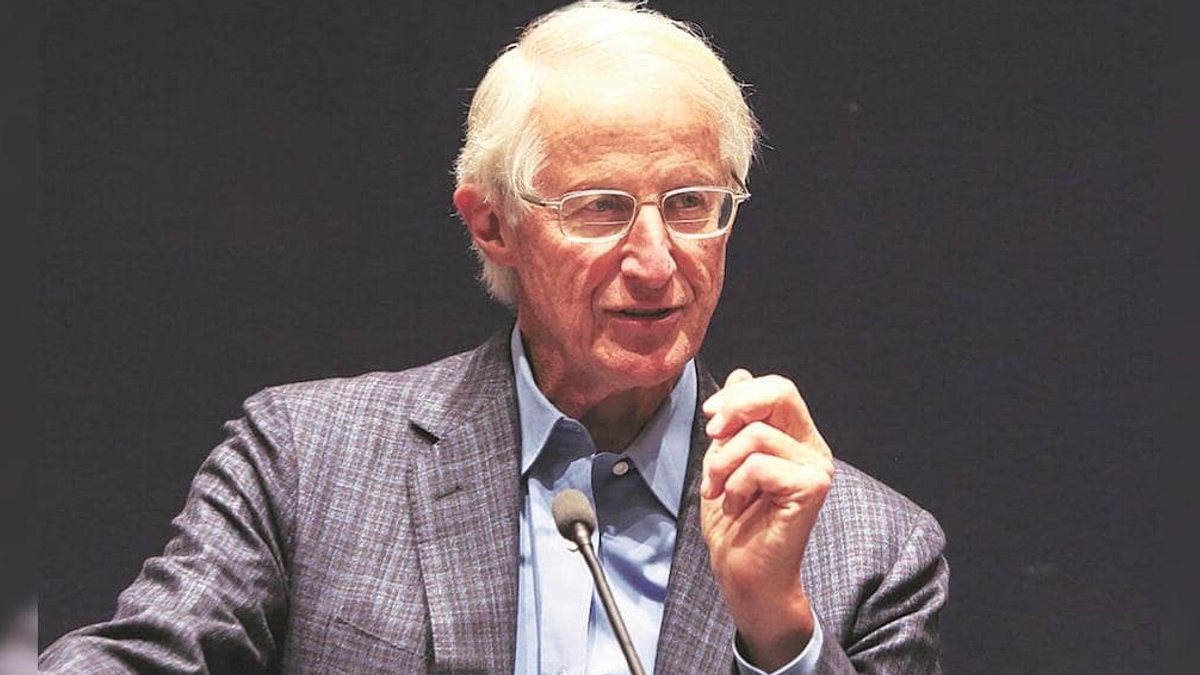
William Nordhaus, the Yale economist who shared the 2018 Nobel Prize for integrating climate change into long-term economic analysis, has died at 85. His work laid the foundation for carbon pricing, a policy tool now central to global efforts to curb emissions.
Pioneering Climate Economics
Nordhaus began tackling climate change in the 1970s, long before it became a mainstream economic concern. His Dynamic Integrated Climate-Economy (DICE) model linked economic growth, carbon emissions, and global temperatures, allowing policymakers to weigh the costs of climate damage against emission reduction efforts.
In 2017, he estimated an optimal carbon tax of $30 per tonne of CO2, roughly 27 cents per gallon of gasoline. He acknowledged the figure could range from $6 to $93, reflecting the complexity of balancing economic growth and environmental protection.
A Climate Club Proposal
Nordhaus argued that voluntary agreements often fail due to free-riding. He proposed a climate club, where member countries agree on a carbon price and impose tariffs on imports from non-members. The European Union’s carbon border adjustment mechanism is seen as a step toward this model, though it has faced objections from exporting nations.
Some economists suggest countries like India and China could benefit from such a system. However, economist Dean Spears has noted that India’s exposure to warming may be greater than Nordhaus’s models indicate.
Beyond Climate: Innovation and Policy
Nordhaus also studied the distribution of gains from innovation. A 2004 NBER paper found that between 1948 and 2001, U.S. producers retained only 2.2% of the returns from technological advances, concluding that “most of the benefits of technological change are passed on to consumers.
Born in Albuquerque, New Mexico, in 1941, Nordhaus earned his PhD at MIT under Robert Solow and joined Yale in 1967. He served on President Jimmy Carter’s Council of Economic Advisers, chaired the Boston Fed’s board, and co-authored the 19th edition of Paul Samuelson’s classic economics textbook.
Nordhaus practiced what he preached, helping Yale implement an internal carbon charge in 2014. In his final years, he worked on making an economics textbook freely available to all learners.
Former Yale president Richard Levin said, “He wanted to perfect the institution he loved, and he wanted to spare humanity the avoidable harm of uncontrolled global warming.”
Addressing Obstacles to Climate Action
Some challenges to tackling climate change are real, like the need for new technologies and global cooperation. Others are unnecessary, created by polluters’ financial interests or flawed political arguments. Scientists and engineers must tackle the real obstacles, while education and patient rebuttal are needed to address the man-made barriers.


