
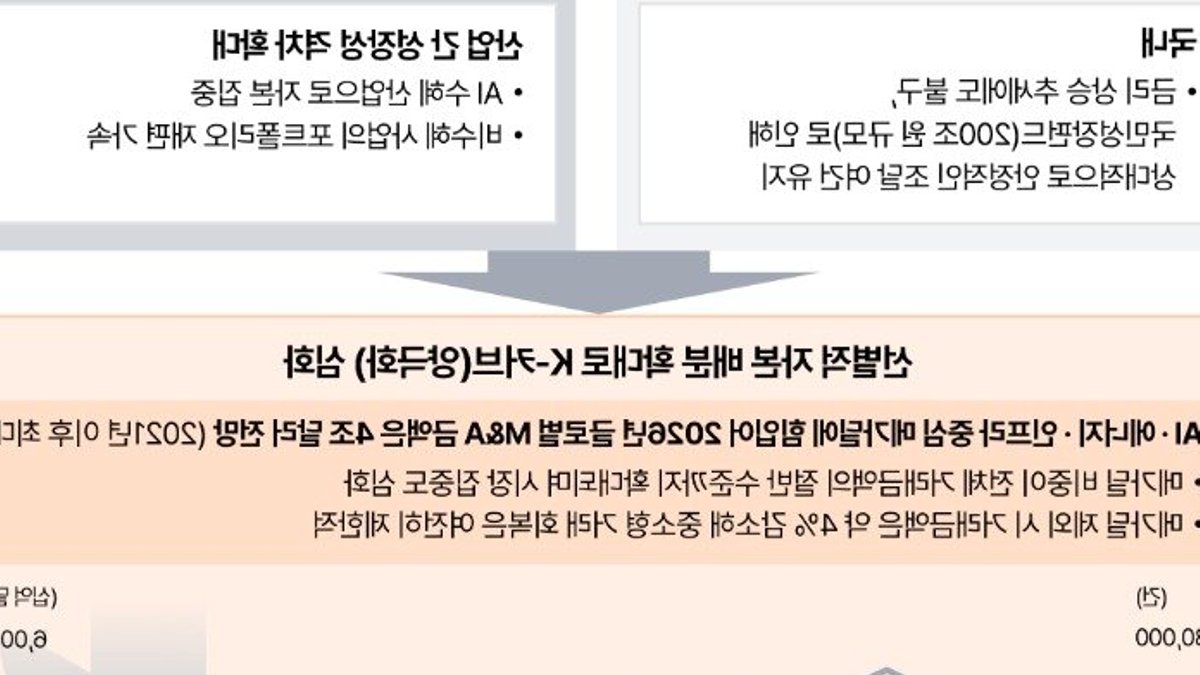
Global mergers and acquisitions activity is on track to reach its highest level in five years, fueled by surging investment in artificial intelligence, the energy transition and supply chain restructuring. Samil PwC forecast that global M&A deal value will reach $4 trillion this year, the highest level since 2021, as companies increasingly pursue acquisitions alongside capital spending to secure growth opportunities. The US tech slump has not dampened this overall expansion.
Big Deals and Market Shifts
Global M&A deal value reached $2 trillion in the first half, up 42 percent from a year earlier, signaling continued momentum in the second half. However, the number of deals fell 10 percent to 20,835, the lowest level in six years, as companies focused on fewer but significantly larger transactions. Mega-deals valued at more than $5 billion accounted for 40 percent of total deal value in the first half, up from 32 percent in 2020.
Excluding those large transactions, overall deal value declined about 4 percent, indicating that smaller M&A activity remains subdued. The Americas accounted for 61 percent of global deal value, with an average transaction size of $210 million, far exceeding Europe, the Middle East and Africa at $60 million and Asia-Pacific at $40 million. Asia-Pacific was the only region to post growth in deal volume, rising 8 percent from a year earlier, although the recovery in total deal value remained modest because of a lack of mega-deals.
Industry Targets
The largest transaction of the first half was NextEra Energy’s $67 billion acquisition of rival Dominion Energy. It was followed by Pershing Square’s proposed $64 billion acquisition of Universal Music Group and Amazon’s $50 billion investment in OpenAI. OpenAI attracted a combined $110 billion from Amazon, SoftBank and Nvidia during the first half.
Related: Korea’s Output, Consumption, Capex Triple in June
Investment is expected to flow heavily into AI-related infrastructure such as power, data centers and semiconductors, while traditional software companies are likely to face restructuring pressure because of AI-related disruption and pricing challenges. In South Korea, the planned creation of a 200 trillion won ($141 billion) National Growth Fund is expected to provide stable financing for strategic industries and corporate restructuring, supporting M&A activity.
Industry prospects are expected to diverge. In healthcare, pharmaceutical companies are likely to pursue acquisitions to strengthen drug pipelines ahead of patent expirations while expanding consumer-focused healthcare services. In information technology, telecommunications and media, investment is expected to concentrate on AI infrastructure, whereas conventional software companies may become less attractive acquisition targets.
Industrial companies and automakers are expected to increase investment in defense technologies and AI automation, while financial institutions are likely to pursue consolidation and acquisitions to strengthen digital asset capabilities. The accounting services firm warned that capital will become increasingly concentrated in high-growth, strategically important sectors, widening the gap between industries in what it described as a “K-curve.”


