
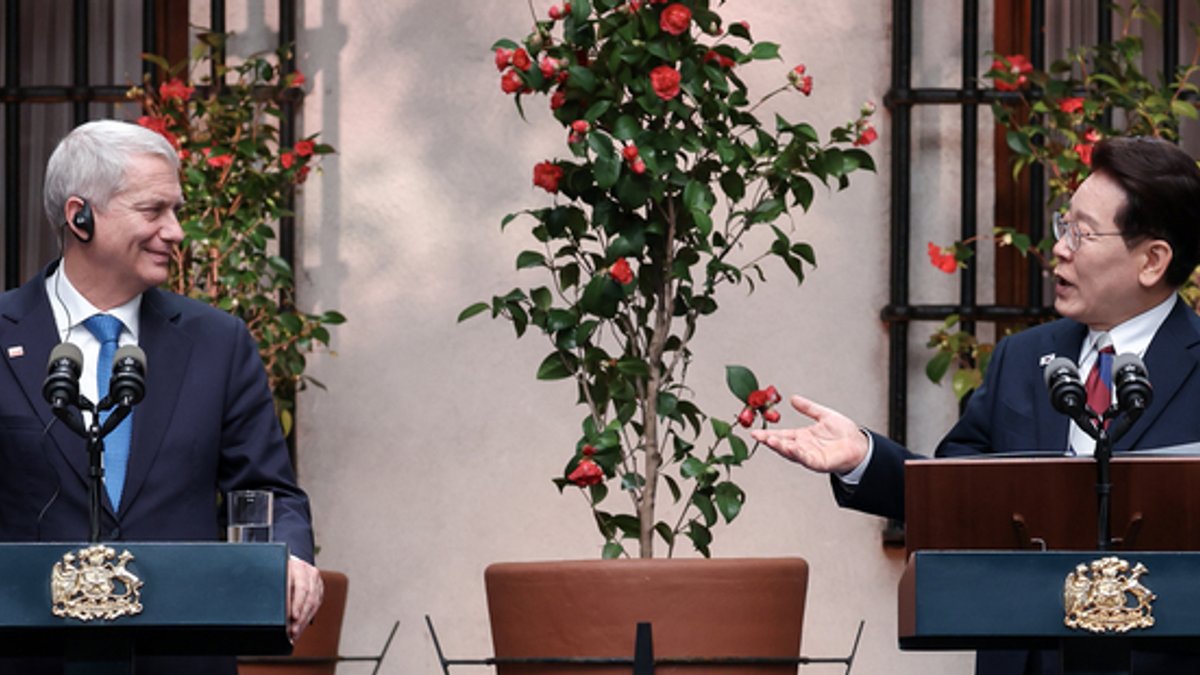
South Korea and Chile revived their Korea‑Chile FTA Joint Committee at a summit in Santiago on Thursday, marking the first meeting in ten years and signaling a push to modernize the two‑decade‑old trade pact.
Leaders restart dialogue and sign critical minerals pact
President Lee Jae‑myung met Chilean President José Antonio Kast at the presidential palace, where they agreed to reactivate the joint committee that had been dormant since 2014. The move aims to align the agreement with current global trade conditions.
Following the talks, Lee said Chile was the first South American nation to recognize Korea in 1949 and that Korea chose Chile as its inaugural free‑trade partner in 2004. “Since then, bilateral trade has quadrupled over the past 20 years, proving that the strategic decision made by both countries was the right one,” he noted.
In addition to the committee revival, the leaders signed five memoranda of understanding covering critical minerals, public security, polar research, maritime safety and investment. The most prominent of these establishes a ministerial‑level framework for cooperation on critical minerals and creates a working‑level channel led by director‑general officials.
Related: Korea’s Output, Consumption, Capex Triple in June
Critical minerals cooperation expands to full supply chain
The new agreement focuses on the entire supply chain for strategic minerals such as lithium and copper, from resource development to downstream use. Chile, the world’s largest copper producer and holder of the biggest lithium reserves, and Korea, a leader in semiconductors and battery technology, view each other as natural partners for building resilient supply chains.
Lee said the partnership will broaden information sharing, technology development and human‑resource exchanges across the minerals sector. Both sides see the collaboration as a way to reduce dependence on other sources and to secure stable inputs for high‑tech manufacturing.
The agreement also touches on broader economic cooperation.
Discussions included infrastructure projects, shipbuilding and defense. Lee highlighted the Chacao Bridge, South America’s first four‑lane suspension bridge, which is being constructed by a Korean contractor. He expressed hope that continued government support would help the project benefit Chile’s economy and local communities.
Related: Klang Valley property market stays steady
While the memorandum sets a clear framework, the practical impact will depend on how quickly the working‑level channel can translate policy into action. Both nations have expressed commitment, yet the logistics of coordinating across continents and agencies may pose challenges that could delay tangible outcomes.
Analysts note that the timing aligns with growing global interest in securing critical mineral supplies amid geopolitical tensions. By formalizing a ministerial channel, the two countries aim to streamline decision‑making and reduce bureaucratic inertia.
Officials will meet in the coming months.
The success of these initiatives could influence similar agreements elsewhere, especially as other nations seek to diversify their mineral sources.


